Contents
When someone types “jewelry gift ideas” into Google, a results page appears, and in the vast majority of cases they click one of the first 3 links.
The goal of SEO is precisely to be one of those 3 links.
 On a results page, most clicks go to the first 3 links
To me, it is one of the most interesting acquisition channels there is. The main reason is that it targets intent: the person running that search is looking for something specific. And the good news: it's free.
Of course, there is a trade-off: SEO takes longer than advertising, whether that means Google Ads or social media ads. That is exactly what we will look at in this article, starting from scratch.
1. What is SEO?
The acronym
SEO stands for Search Engine Optimization. It is also called organic search or natural search. These terms all mean the same thing. For simplicity, this article uses SEO.
In practice
SEO is about making your website better for search engines, in order to increase its visibility and attract relevant traffic.
Put more simply: SEO covers everything you do so that Google, Bing or Ecosia understand your website, trust it and show it to the right people.
How Google decides what to show
- Crawling: bots browse the web by following links from one page to the next.
- Indexing: Google analyzes every page it finds and stores it in its huge database.
- Ranking: when someone runs a search, Google picks the pages from its index that answer best, and puts them in order.
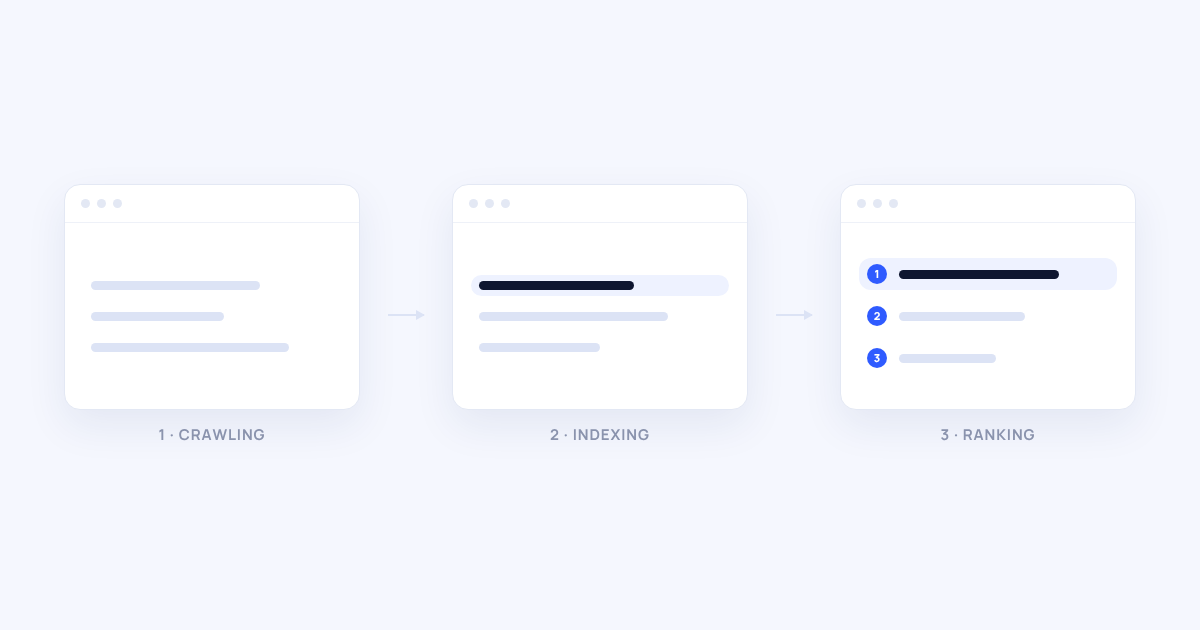 Crawling, indexing, ranking: the 3 steps before a page appears in the results
SEO work means making each of these steps easier: so that pages are found, understood, then judged relevant.
2. Why it matters
Search engines are now the main entry point to the web. To find information, a product or a service, most people start with a search.
On the results page, clicks concentrate on the top positions. A poorly ranked website therefore stays barely visible on this channel, however good its offer.
SEO also stands apart from other channels in how it works. On social media or in advertising, you go out and capture people's attention. With organic search, it is the user who expresses the need: the role of SEO is to make sure the website shows up as a relevant answer to that need.
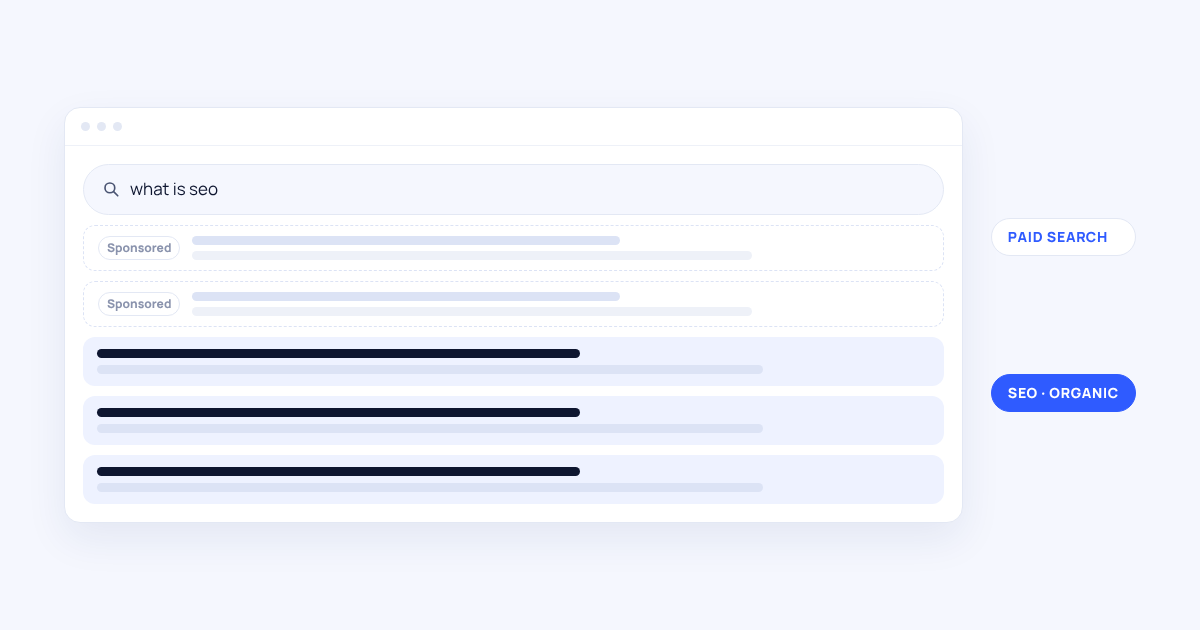 Sponsored ads (paid search) show at the top, organic results (SEO) right below
3. The 3 pillars of SEO
SEO has a reputation for being a technical, complex field. Search engines do use many criteria, but they fall into three main families.
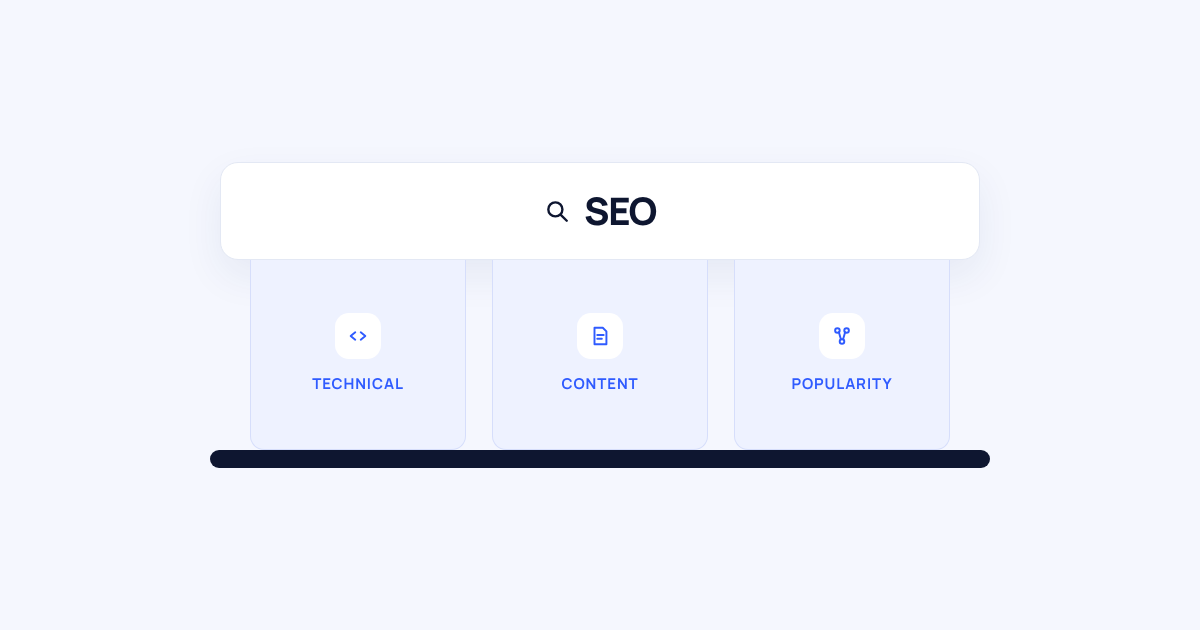 Technical, content, popularity: the 3 families of organic search criteria
Technical
Before it can rank a page, a search engine must be able to access it and read it. The technical side covers everything that makes this possible:
- pages that crawlers can access;
- fast loading times;
- a mobile-friendly display;
- a secure connection (an https address);
- a clear structure, with pages linked to one another.
Most of today's website builders (WordPress, Shopify, Wix…) already handle part of this.
Content
A search engine's goal is to show the most relevant answer to every search. The more clearly a page answers a specific question, the better its chances of ranking well.
Two notions matter here:
- keywords, meaning the terms people type into the search engine;
- search intent, meaning what people are really looking for behind those words: learning, comparing, buying, finding a place…
For example, someone searching for “jewelry gift ideas” is usually looking for inspiration. A page offering a curated, commented selection will match that intent better than a single product page.
Popularity
When a website links to another, search engines read it as a form of recommendation. These incoming links are called backlinks.
Not all links carry the same weight: a link from a well-known website on a related topic counts for more than many links from unrelated websites.
Summary
| Pillar | Question to ask | Examples |
|---|---|---|
| Technical | Can search engines access and read the website? | Speed, mobile, https, structure |
| Content | Do the pages answer what people search for? | Keywords, search intent, clarity |
| Popularity | Do other websites recommend it? | Quality backlinks, mentions |
4. What good SEO brings
Well-executed SEO has several effects:
- More visibility on searches related to the website's activity, including among people who did not know it yet.
- Qualified traffic: visitors arrive with a need that matches the page's content.
- More credibility: appearing among the top results is often seen as a sign of reliability.
- Traffic with no cost per click: unlike advertising, visits from organic search are not paid for one by one. SEO does, however, require an investment in time and content.
5. The long-term view
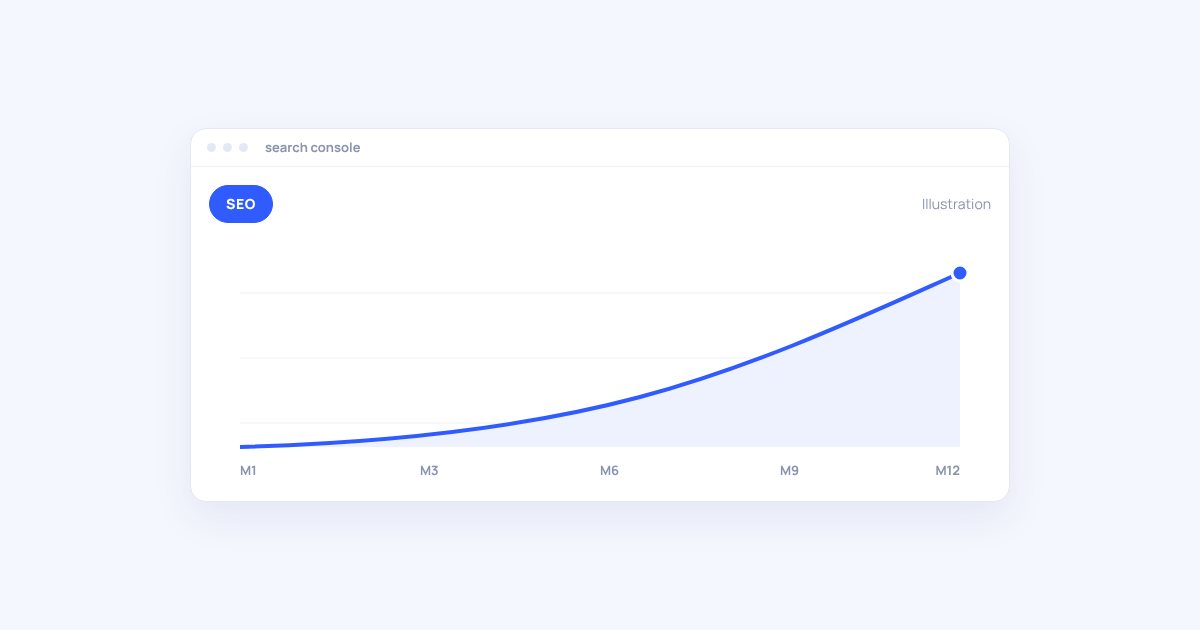
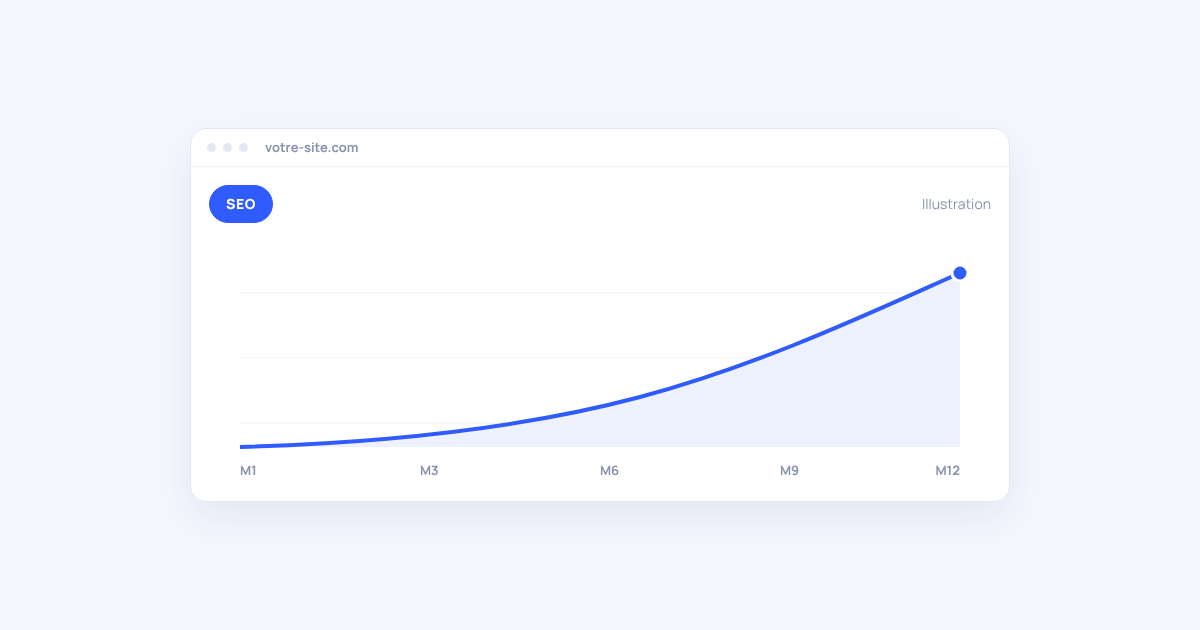
SEO rarely has immediate effects. The first results usually show after several months, depending on competition on the topic, the age of the website and the work done.
In return, its effects last. An ad campaign stops when the budget stops. A well-ranked page, on the other hand, can keep attracting visitors for a long time. Published content adds up over time, and so do its effects.
Rankings are never set in stone, though: competitors improve and search engines keep updating their algorithms. The principles stay the same: a website that is accessible, useful and recognized by other websites keeps a lasting edge.
Conclusion
SEO covers every action that helps a website be found, understood and judged relevant by search engines. It rests on three pillars: technical, content and popularity.
It is a lever that takes time, but its effects build up and compound. Upcoming articles in the SEO section will cover each of these three pillars in detail.