Contents
Whenever I join a new SaaS company, there's always the same moment. Someone shows me the company's marketing persona, usually as a fairly polished Canva: a fake first name, a stock photo smiling a little too much, an age, a job title, an industry. Everyone put time into it, some even pinned it on the wall, and yet that document might just as well have been a single line in an onboarding doc. It wouldn't have changed a thing, because the problem isn't the format, it's what the persona is supposed to tell us.
Why the classic marketing persona no longer cuts it
The marketing persona isn't useless in itself. It served us well for years, back when marketing was mostly about targeting the right audience with the right message, on the right channels, to capture the attention of someone who hadn't touched the product yet. That's 2017 marketing, where everything happens before the purchase. You segment, you target, you convince, and the product only enters the picture once the credit card is out.
The problem is that it's 2026, and that model no longer fits the way a digital product sells today. Users get their hands on the product before they take out their credit card, often long before. They test, they explore, they form an opinion as they go. The buying decision no longer happens in a well-targeted campaign, it happens in the first ten minutes of use, or in the third week of a free trial when the habit starts to settle in. Reasoning only with a marketing persona means trying to steer that mechanism with the tools of a kind of marketing that no longer applies.
A marketing persona answers one question: who is going to buy. It answers none of the questions that really matter when usage comes before purchase: who is going to use the product every day, what will bring them back, what will make them drop off. These aren't nuances, they're two different logics. And that's exactly the view put forward in Product-Led Growth by Wes Bush, a much more up-to-date approach, especially when you sell a digital product like SaaS. It holds for B2B as much as B2C.
What Wes Bush means by ideal user profile
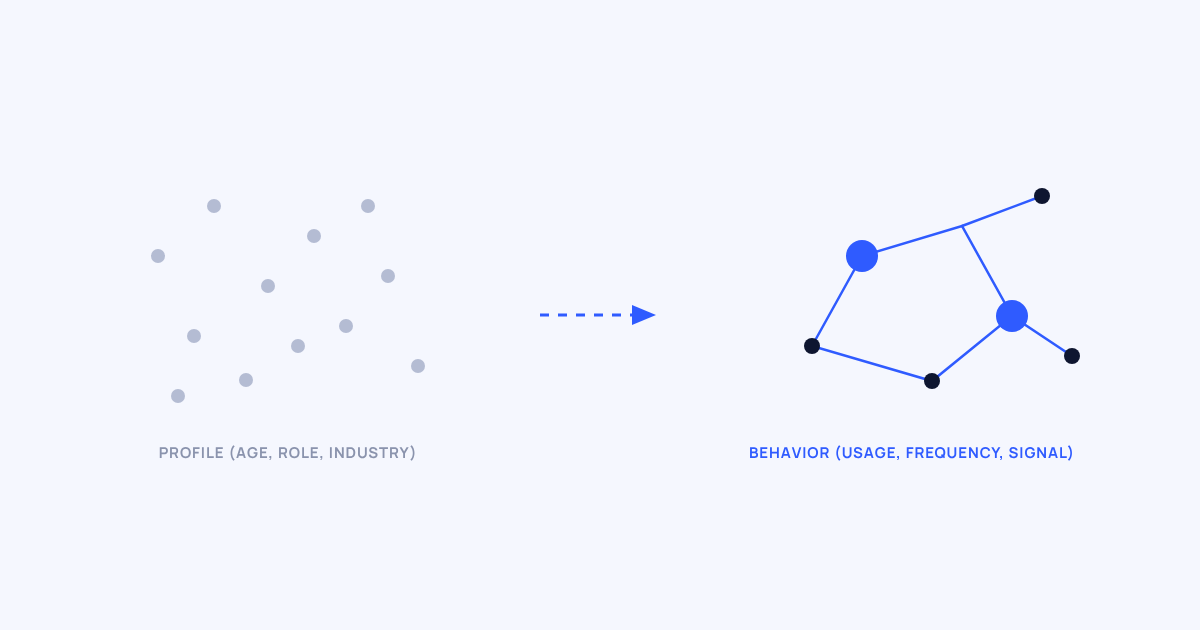
Wes Bush starts from a simple principle, but one that changes a lot once you really apply it: an ideal user profile doesn't describe a person, it describes a behavior. Not an age, not a job title, not an industry. What matters is what someone does with the product, in what context they use it, and which usage signals indicate that they'll stay or leave.
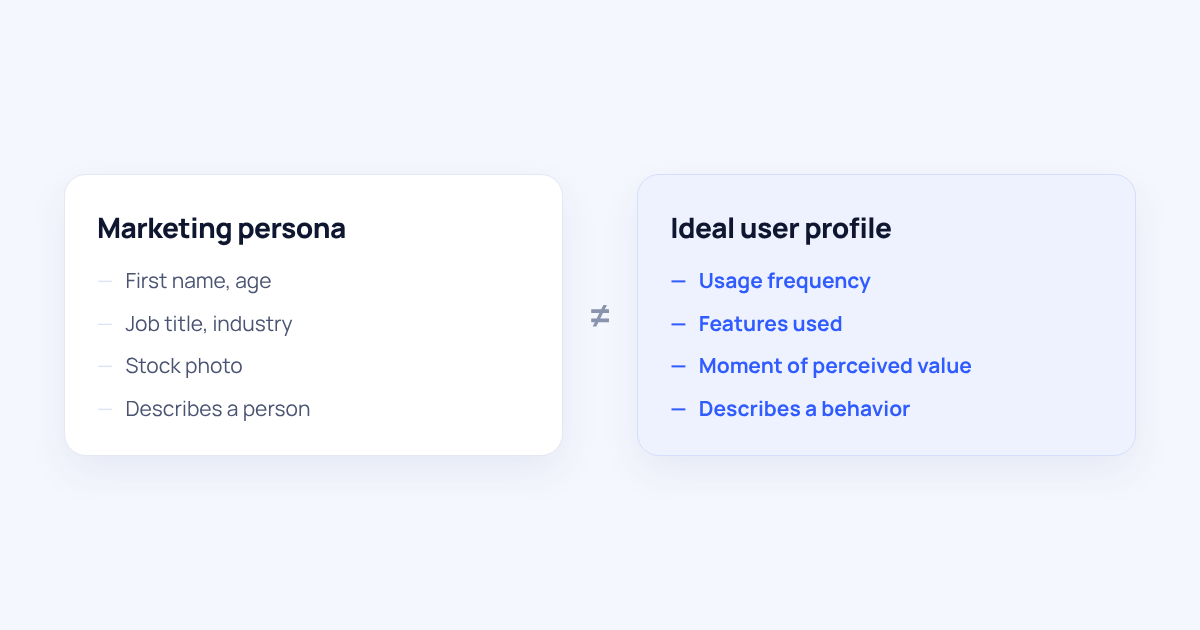 A persona describes who buys; an ideal user profile describes how people use
In practice, that means looking at things a marketing persona never captured: login frequency, the features actually used in the first few days, the moment the user reaches what Bush calls the product's perceived value, or how it fits into an existing work routine. Two people can have exactly the same demographic profile and yet behave in completely opposite ways with the product. The reverse is true as well: two different demographic profiles can share identical usage behavior, and therefore belong to the same ideal user profile.
That's the shift that changes everything. You're no longer trying to figure out who to talk to, you're trying to figure out which usage to spot. And once you know how to spot it, you can steer acquisition, onboarding and content toward the signals that actually predict retention, rather than toward criteria that never predicted anything at all.
How to build one in practice
Identify the usage signals that predict retention
The case most often cited in growth literature is Slack. The team noticed that a team exchanging more than 2,000 messages on the platform was very likely to remain a customer over the long term. Below that threshold, churn rose sharply. It's no coincidence that Slack geared its entire onboarding toward reaching that usage threshold quickly, rather than toward sign-up itself. Dropbox followed a similar logic with its famous moment when a user had put at least one file in at least one synced folder on at least one device. Once that behavior was observed, the likelihood of retention rose significantly.
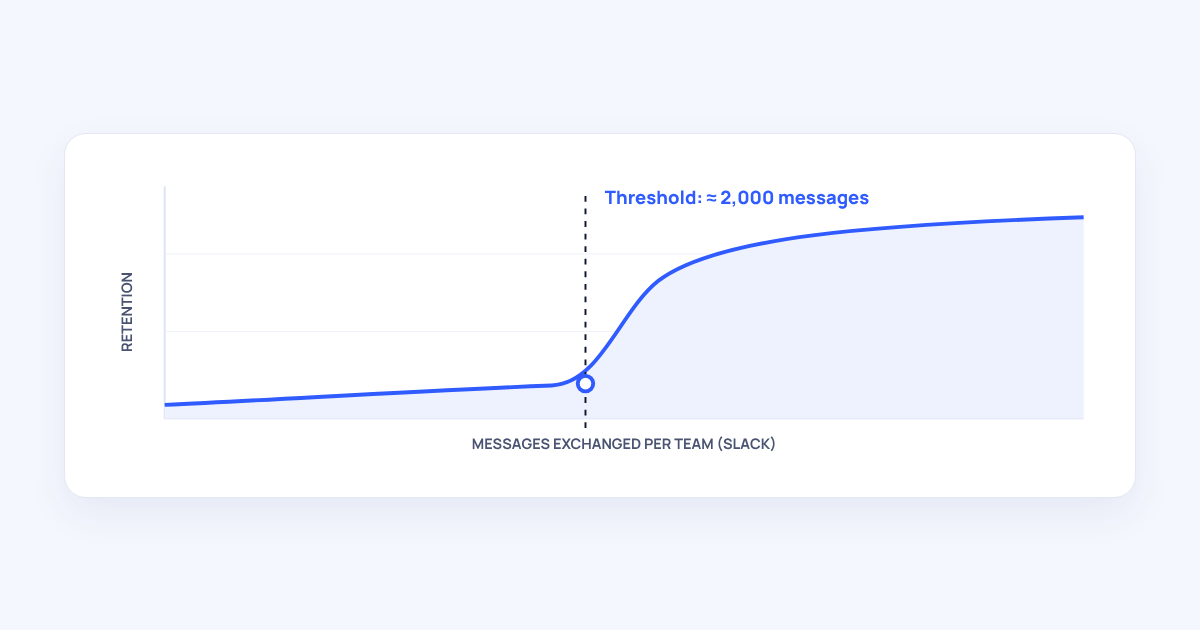 Dropbox sees the same threshold effect as soon as a file is synced to a second device
You'll never find that kind of signal in a persona. It only emerges by looking at product data, cross-referencing actual usage with the customers who stay, and searching for the behavior that truly separates those who stay from those who leave.
Tell apart who makes the buying decision and who actually uses the product
In B2B, these two roles are very often held by different people, and confusing them is one of the most common mistakes. Figma is a good example: the product spread from the bottom up, carried by designers who used it every day, long before official buying decisions reached IT departments or product leaders. The classic marketing persona would probably have targeted the budget holder. The ideal user profile, on the other hand, pointed to the everyday user, the one who would become the product's internal champion.
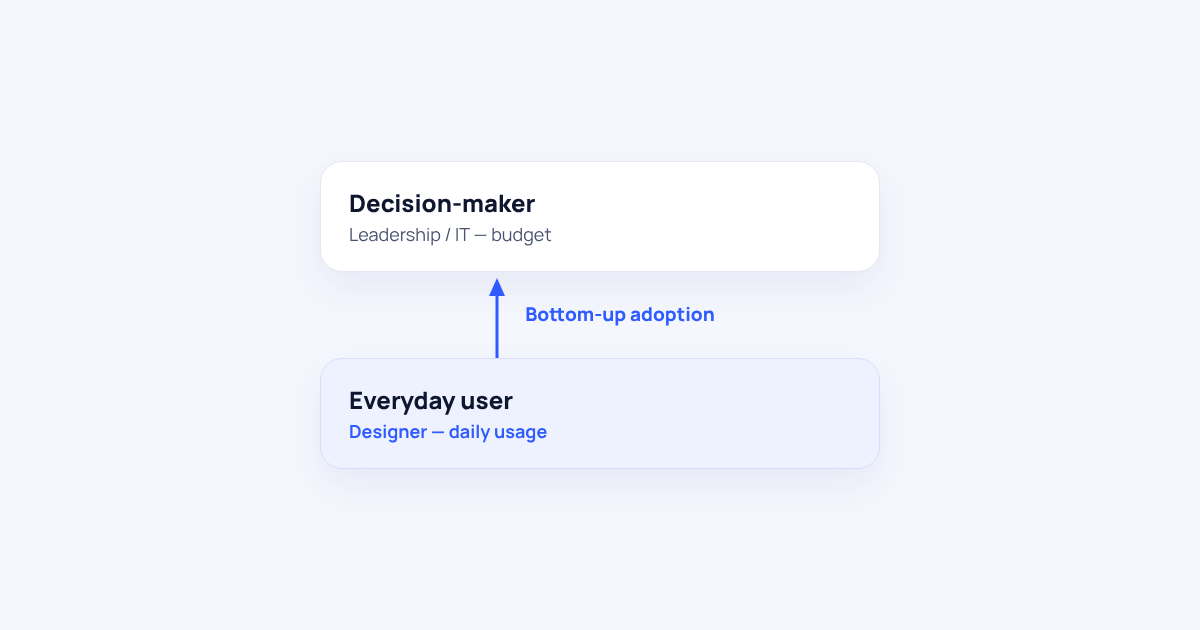 Figma: the product spread from the bottom up, even before the official buying decision
Ignoring this distinction often leads to building the entire marketing message around the person who signs the check, completely forgetting the one who will make or break the product's adoption internally.
Segment by usage context rather than firmographics
Classic segmentation slices the market by company size, industry or region. That's useful for organizing a sales force, much less so for understanding why a user stays. Notion illustrates this logic well: the same person can use the tool to organize personal notes or to structure the work of an entire team, and those two usage contexts have almost nothing in common, even though the company's firmographic profile stays the same.
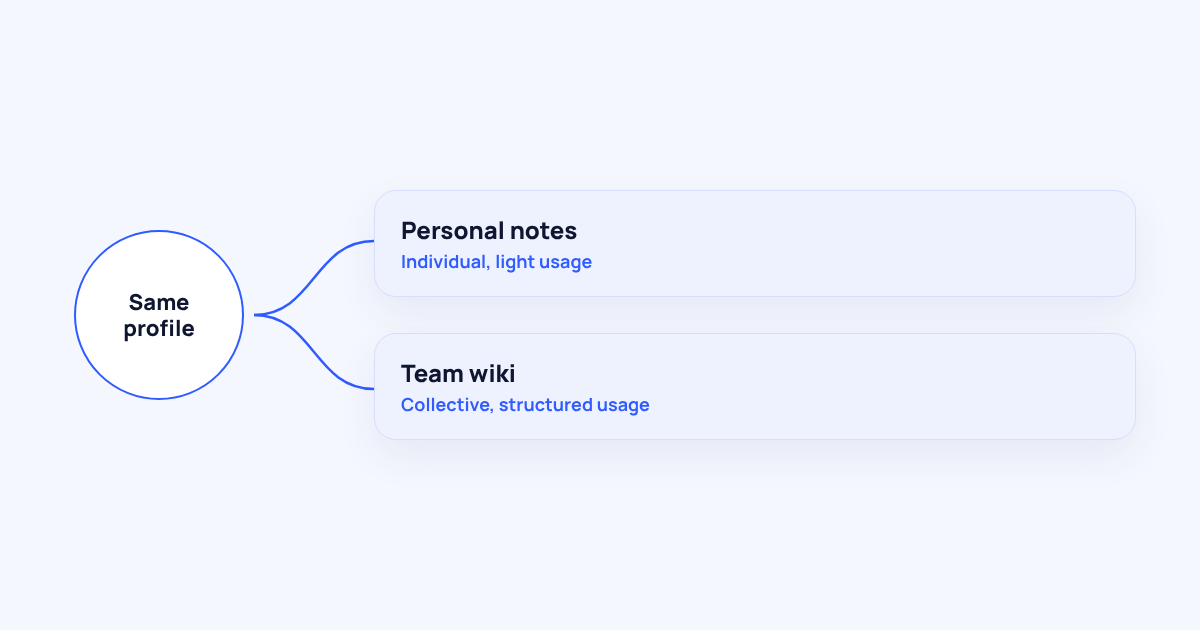 Same firmographic profile, two behaviors: usage should drive segmentation, not the company
Segmenting by usage context means accepting that the same demographic profile can hide radically different behaviors, and that those behaviors are what should guide acquisition and content.
The mistake you've probably already seen (or made)
A year ago, when I was still freelancing alongside my studies, I pitched a business owner at a trade show. I was offering AI agents to automate some repetitive tasks in his business. The conversation went well, he saw the value, and we set up a meeting to go further. I had built my whole presentation around him: his challenges, his daily routine, the workload he'd described to me.
Except that when the meeting came, he didn't come alone. Next to him was the person who would actually use the tool every day, the one whose work was directly affected by the tasks I was proposing to automate. And that's where it stalled. My entire presentation matched the business owner's needs and big-picture vision, but it barely spoke to the person who would be using it every day. Her questions were about very concrete usage details that I hadn't anticipated at all, because I had prepared only one profile, that of the person deciding to buy.
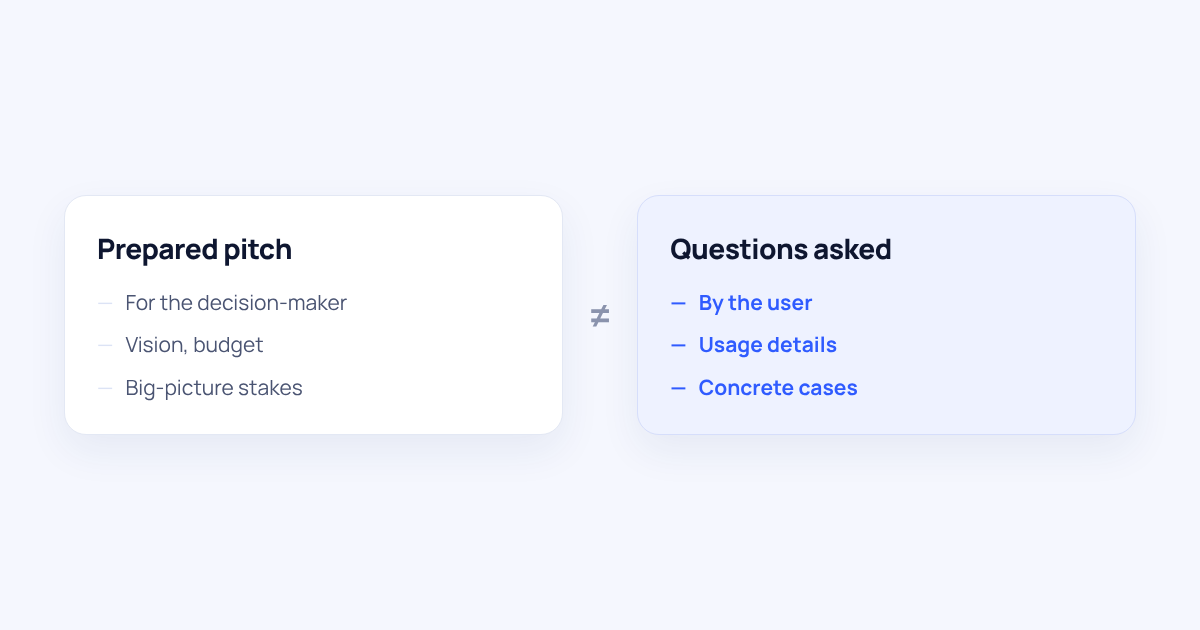 A pitch built for whoever signs doesn't necessarily speak to whoever uses
That day, I understood in a very concrete way what Wes Bush explains in his book. The business owner was my ideal marketing persona: decision-maker, budget, clear motivation. But he wasn't my ideal user profile. Proper preparation should have covered both, with two distinct pitches, because convincing the person who signs is pointless if the person who uses the product every day doesn't recognize themselves in what you show them.
Want to see how I apply this in practice?
SEO, SEA, LinkedIn, automation: my projects sorted by field, with the results behind each one.
See my projects →What it changes for marketing and acquisition
Once you've understood this, you can't do 2017-style marketing anymore. Every acquisition decision starts from an assumption about who you're targeting, and if that assumption rests on a persona rather than an ideal user profile, everything that follows inherits the original mistake. The content you write answers the questions of a typical decision-maker rather than the real friction points of the everyday user. SEO gets built around keywords that make sense for a job title, not for a use case. Paid campaigns target demographic or firmographic criteria, when what really predicts conversion and retention are behavioral signals those criteria never capture.
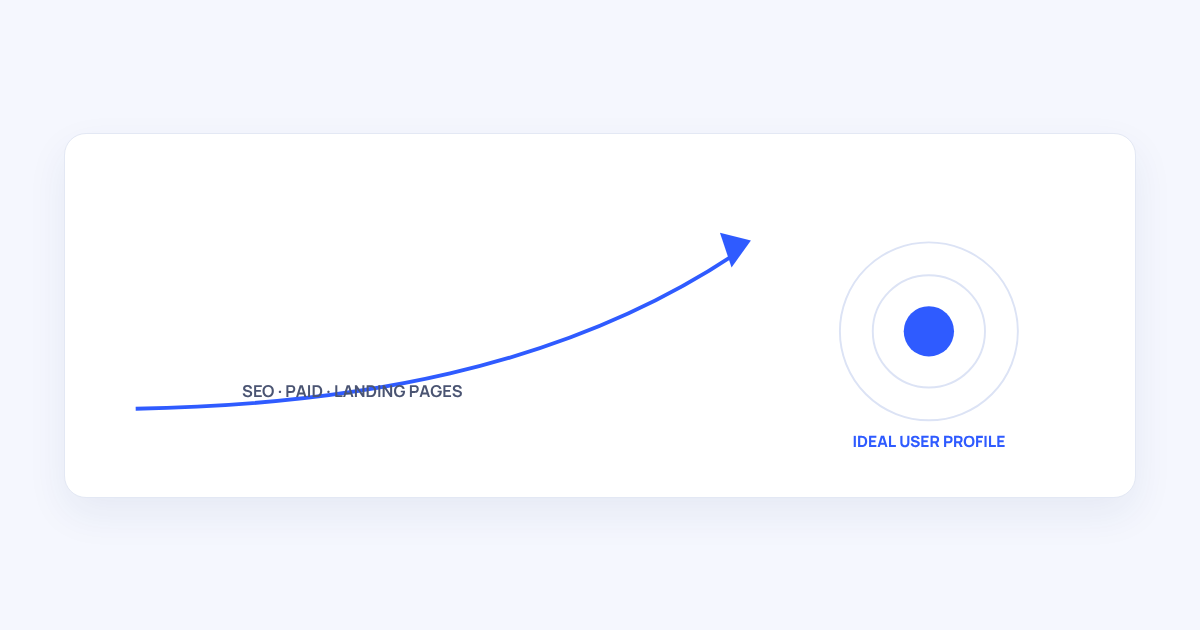 Optimizing harder doesn't fix an ideal user profile that was poorly defined from the start
And that's where many marketing teams fight the wrong battle. Faced with disappointing results, the reflex is often to optimize what already exists even harder: improve click-through rates, rework landing pages, test other ad audiences. But none of these optimizations fixes a problem that sits upstream.
"Marketing can't make up for a bad ideal user profile, it can only execute it more efficiently, in the wrong direction."
It's a point I try to bring to my professional experiences: before discussing media budget or content strategy, you need to have settled who really uses the product, and which usage signals you're going to track. The rest of the marketing strategy follows directly from that. Without that foundation, you're optimizing in a vacuum, with results that give the illusion of a job well done without ever touching the real root causes.
Conclusion
Everything we've just covered starts from a simple principle: usage should guide strategy, not the buyer's demographic profile. But that principle doesn't apply the same way to every product, and it needs to be said clearly to avoid falling into dogmatism.
Take a product that's sold only once, a swimming pool for example. Once the sale is closed, there's no recurring usage to observe, no retention signal to track, no subscription to save. The ideal user profile loses much of its usefulness in that context, because the very mechanics of PLG rely on repeated usage that influences a future decision: the upgrade, the renewal, the expansion. With a one-off purchase, that loop doesn't exist in the same way. That said, it doesn't mean the post-purchase experience doesn't matter. An unhappy pool customer won't unsubscribe, but they'll talk about it, leave a negative review, and that ends up weighing on acquisition in the long run anyway. The mechanism is different, the stakes are just as real.
For every other case, every product where usage comes before and shapes the purchase or renewal, what Wes Bush explains in his book really changes the way you do marketing. I wholeheartedly recommend it to anyone whose acquisition doesn't rely on a purely sales-led model. It's not just another growth book, it's a new way of looking at who you're really trying to convince.